

Helping kids to connect with science requires experts to break down concepts into bite-sized pieces that everyone understands. And for kids, it’s more memorable when those concepts are gross.
EcoReach, the Odum School of Ecology’s student-led outreach program, has found a niche translating scientific topics for Athens-area kids, like how stomach acids break down flesh, how swarms of insects migrate, and how fungi or bacteria get their energy from dead organisms.
Fall creates a particularly good opportunity for EcoReach to tap into kids’ fascination with the gross, the creepy, and the crawly.
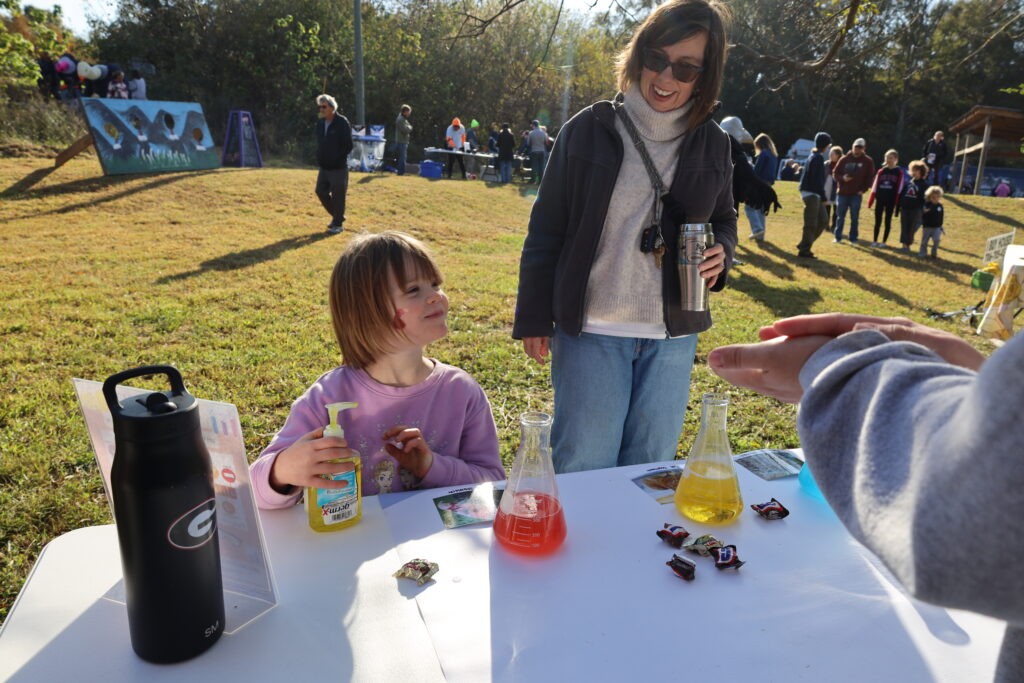
“There are many opportunities for themed outreach activities, and many ecological concepts naturally align with seasonal topics and holidays,” said Maya Gonzalez, a master’s student at the Odum School and president of EcoReach. At Scary Oozy Slimy Day, an event sponsored by Athens-Clarke County at Sandy Creek Nature Center in the lead-up to Halloween, EcoReach capitalized on one of the creepiest parts of nature: decomposition.
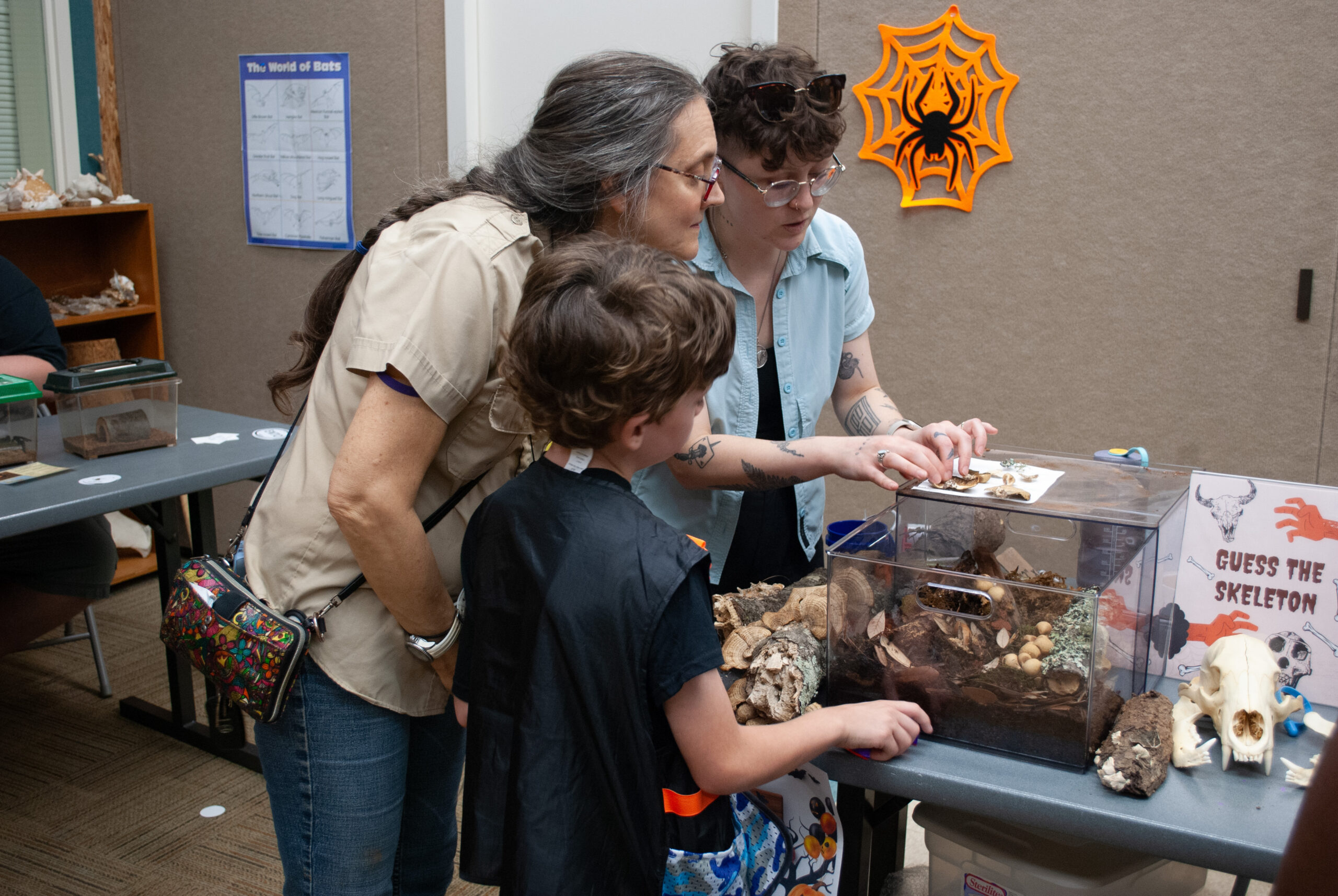
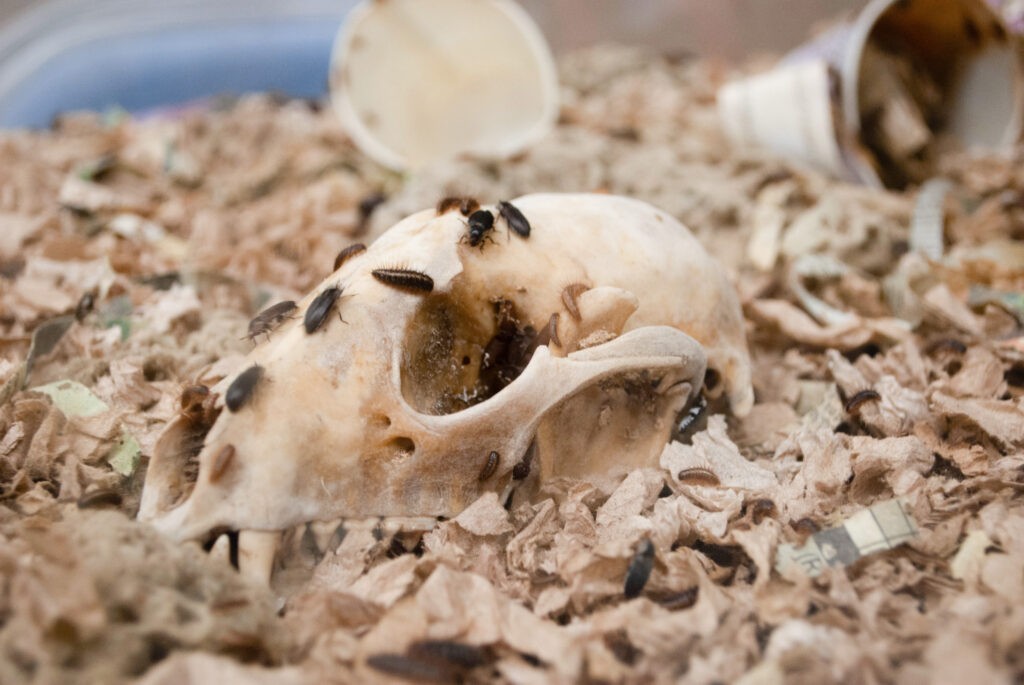
Student volunteers brought a colony of dermestid beetles that spent the day feeding on a pair of elk jaws. Two of the EcoReach volunteers, Ph.D. student Kane Moser and undergraduate Aether Sachdeva, foraged mushrooms like turkey tail, pear puffballs and gilled polypore for a decomposition station, which also featured a decaying log, earthworms and a few species of beetles.
EcoReach volunteers taught children and their parents how important decomposers are in their ecosystems and what they leave behind once their job is done.
“People won’t protect what they don’t understand, and getting someone to hold a snake or beetle can really ease their fears while we tell them about the unique and important role that animal has in the ecosystem,” Gonzalez said.
At Scary Oozy Slimy Day, the Georgia Museum of Natural History provided EcoReach with real pelts of animals like a skunk and an opossum, two species that most people would run away from in nature. Petting those pelts drew kids in with something furry and familiar, and encouraged them to take on something a little scarier: the skulls of those animals.
All EcoReach activities are planned and executed by student volunteers, most of them students at the Odum School of Ecology. In addition to tabling at local events, such as Scary Oozy Slimy Day and Vulture Fest—a celebration of “nature’s clean-up crew” which Athens-Clarke County holds at the local landfill—EcoReach volunteers visit classrooms and libraries, bringing programs to K-12 students. Each month, members gather for curriculum meetings to update and organize for upcoming events or brainstorm ideas for new outreach opportunities.

“Outreach gets people to care about something that they might not have learned about otherwise or reinforces lessons that they’re learning in school,” Gonzalez said.
An important part of EcoReach’s mission is engaging curious kids, but educational programs don’t stop at adolescence.
To reach adults, EcoReach and the Georgia Bat Working Group hosted a Bat Week Celebration this year at Athentic Brewing Company, featuring both outreach tables and a screening of the documentary “The Invisible Mammal.”
The Georgia Bat Working Group brought out two live bats, while EcoReach volunteers helped participants—both adults and children—build their own bat from paper components and guess whether bat facts were true or false. With trivia, EcoReach volunteers and master’s students Devon Locke and Tre’Shur Williams-Carter dispelled some common rumors about bat biology, such as whether they are blind and if most bats carry rabies.
Spoiler alert: Both are false!
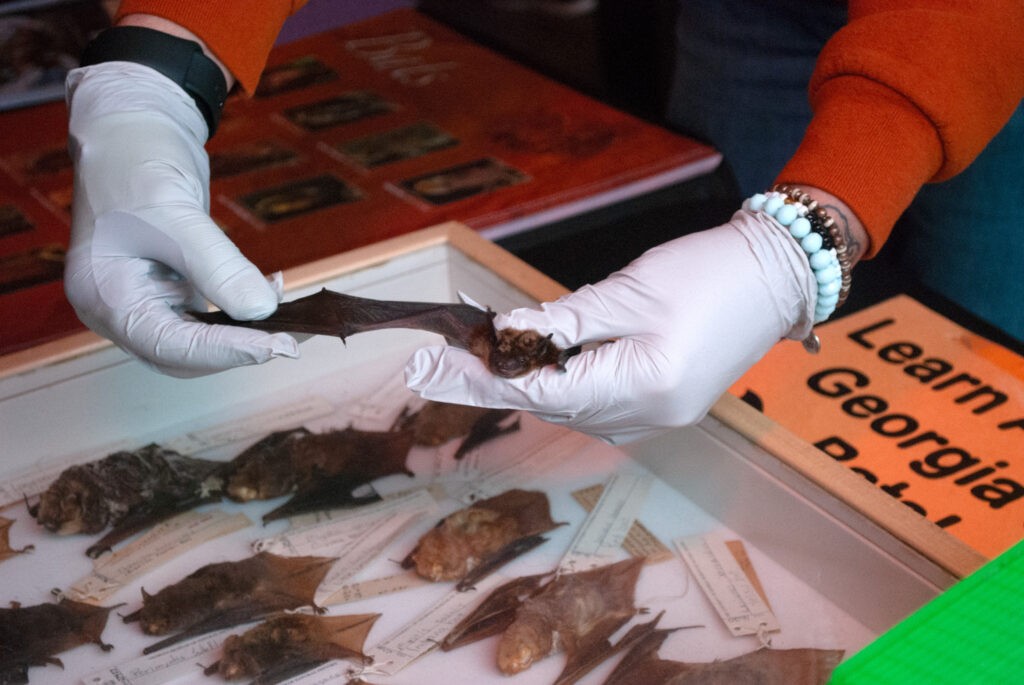
“So many adults fear the unknown. When they can see a bat up close and realize how beneficial they are, they often realize they have nothing to fear and that bats benefit them in so many ways, from insect control to pollination and beyond,” said Nikki Castleberry, a Ph.D. student who volunteers with EcoReach.
After getting some face time with real bats, participants settled in for “The Invisible Mammal,” a film that explores the white-nose disease that has reduced the population of North American bats for many years. The documentary also highlights the contribution that citizen science can provide to scientific projects.
In one night, EcoReach and the Georgia Bat Working Group provided opportunities for people of all ages to interact with and think of bats in new ways.
“One of the most impactful parts of these events is giving people close encounters with some of nature’s least-loved animals, helping them become a little more interesting and a little less scary,” Gonzalez said.