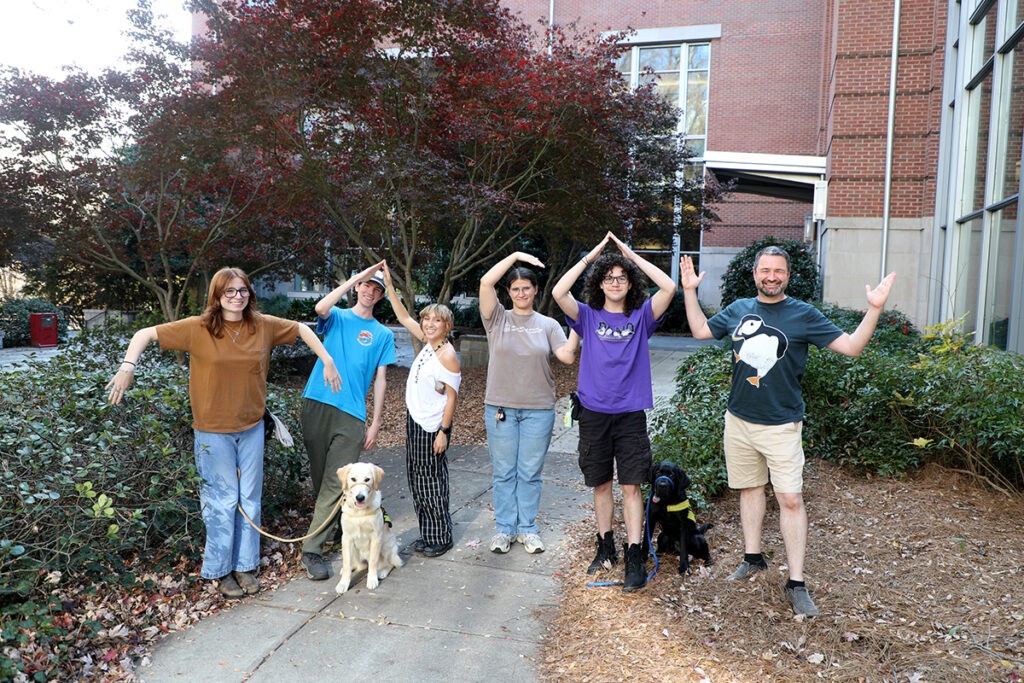


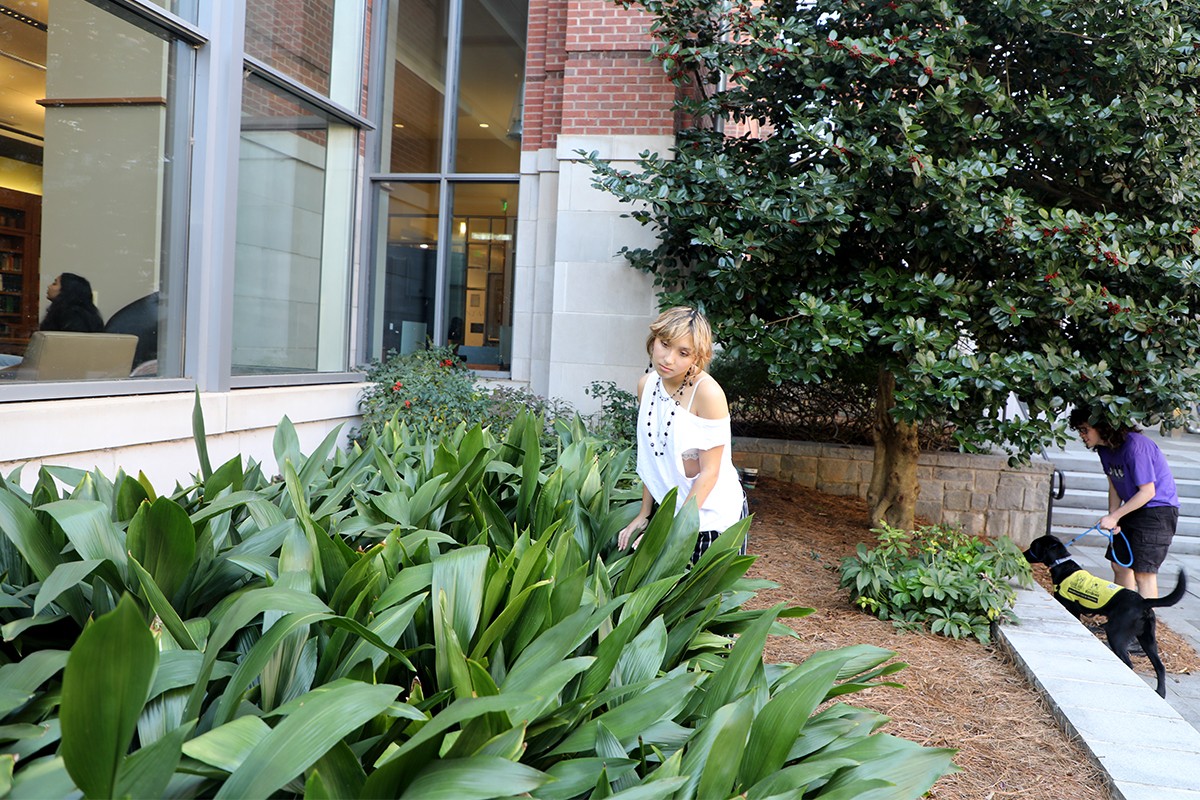
Most students headed to class have a lot more on their minds than checking the ground beneath the windows of their classroom buildings. But for those surveying with Project MACAW, looking out for birds that might have suffered a window collision is a part of their daily commute. Sifting through pine straw, pushing aside leaves and looking through bushes has become an integral part of data collection for this research team.
Kensley McConnell, a fourth-year ecology and economics major and team member with Project MACAW, remembers the first time she encountered a bird that died as a result of a window collision.
“I would have 8 a.m. meetings at Tate on Wednesdays,” McConnell said. “We ended up going outside to meet in small groups and talk about things. I heard someone go, ‘Kensley, there’s a bird over here!’ We were excited to see proof that it was real, but then we were all like, ‘Oh, this is a weird thing to be excited about.’ So, it was this weird confusion of emotion where for the purposes of understanding what was going on and surveying, it was good for data, but as an actual sighting, it was disheartening.”
Flight patterns

Project MACAW: Managing Avian Collisions at Windows is one of UGA’s 20 Vertically Integrated Projects for Research (VIPR) teams. MACAW seeks to identify hotspots and timing of lethal bird collisions with windows on UGA buildings, working with faculty from the Odum School of Ecology, the Warnell School of Forestry and Natural Resources, the College of Environment and Design, and the Department of Anthropology and Lamar Dodd School of Art, both part of the Franklin College of Arts and Sciences. Students and volunteers take short walks to look for evidence of bird-window collisions around UGA buildings. They use these observations to identify what ecological and design features might result in higher collisions.
Richard Hall, associate professor of ecology and MACAW lead faculty advisor, was drawn to this work not only by his admiration for birds, but also through a desire to better understand the university’s architectural design decisions that may contribute to bird collisions.
“Some solutions relate to treating glass, or periodically turning off lights at night during migrations so birds can continue their journeys unscathed,” Hall said. “Additionally, landscaping is a risk. Birds are attracted to places that have glass reflection, but they’re also attracted to a food resource that looks like a good place for them to forage. The two in combination—vegetation certain distances from windows—can be problematic.”
Between volunteer and team-led bird identification walks, MACAW identified 33 bird-window collisions across UGA’s campus during the 2025 fall semester. Josh Caruso, a third-year ecology student and MACAW team member, found dead birds alongside buildings he would not have expected.
“It’s been interesting seeing the results from our studies so far because we designated all the spots around campus that we would go and regularly monitor, looking at buildings that we thought would be problematic based on how much glass they had,” Caruso said. “I’ve been mostly seeing a few really concentrated areas where birds show up around the Tate bookstore windows. Then there are other areas, like the journalism building, that have huge windows going all the way around, but I haven’t found any birds yet.”
Birds of a feather
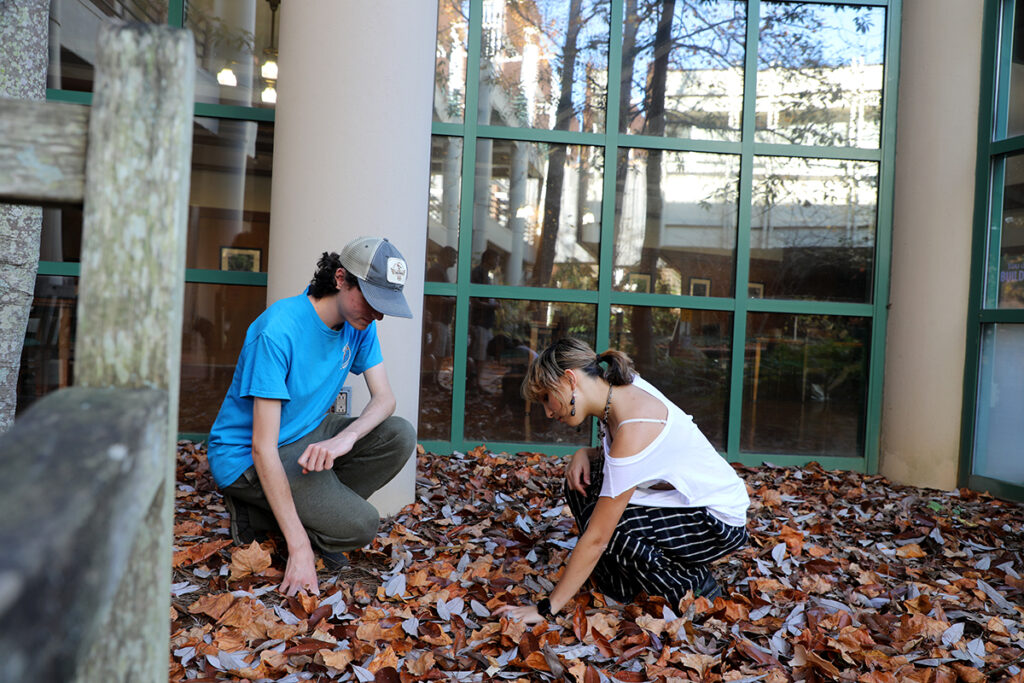
Valor Lekas, a sophomore majoring in ecology and environmental economics and management, began working with Hall in spring 2025 on an independent research study related to bird-window collisions. Lekas first connected with UGA’s Lilly Branch Audubon Society, which has an iNaturalist project documenting bird collisions on UGA’s campus, and realized there was an opportunity to take collision documentation further through a separate research project.
“Lilly Branch has been collecting incidental data through iNaturalist. There are about 100 observations on it, and it’s been going for four years,” Lekas said. “I was like, ‘Oh, I’m surprised nobody’s doing research with this.’ Dr. Hall and I felt this is an important thing and would be a really interesting project. It has a lot of interesting implications that branch outside of why birds are hitting windows. It goes into a lot of different extenuating impacts.”
After spending last semester conducting an extensive literature analysis about the drivers of bird-window collisions, Lekas and Hall decided to extend the program to other undergrads by applying to become a team within UGA’s VIPR initiative. Implemented in fall 2024 by UGA’s Office of Instruction, the program follows the national model from the VIPR Consortium, which aims to engage undergraduate students in long-term, large-scale, multidisciplinary research alongside graduate students, faculty and scientists to solve real-world problems.
“A challenge of studying bird collisions is if you’re one student and you walk around buildings looking for birds, you can’t cover much of campus, and you find very few,” Hall said. “So a project that involves teams of undergrads who have been coordinating volunteers allows us to cover a lot more ground, and then we can really start to look systematically across campus at where birds are striking. Hopefully the VIPR project will bring some visibility to the issue and get students engaged, learning from the process of collecting the data, reading the literature, and understanding the landscape features that predict collision risk.”
The team currently consists of five undergrad students who take routine walks around buildings on campus, locate birds they believe died from window collisions and document their findings for later analysis. Volunteers are also encouraged to help with bird collision identification by documenting any findings through a Google Form.
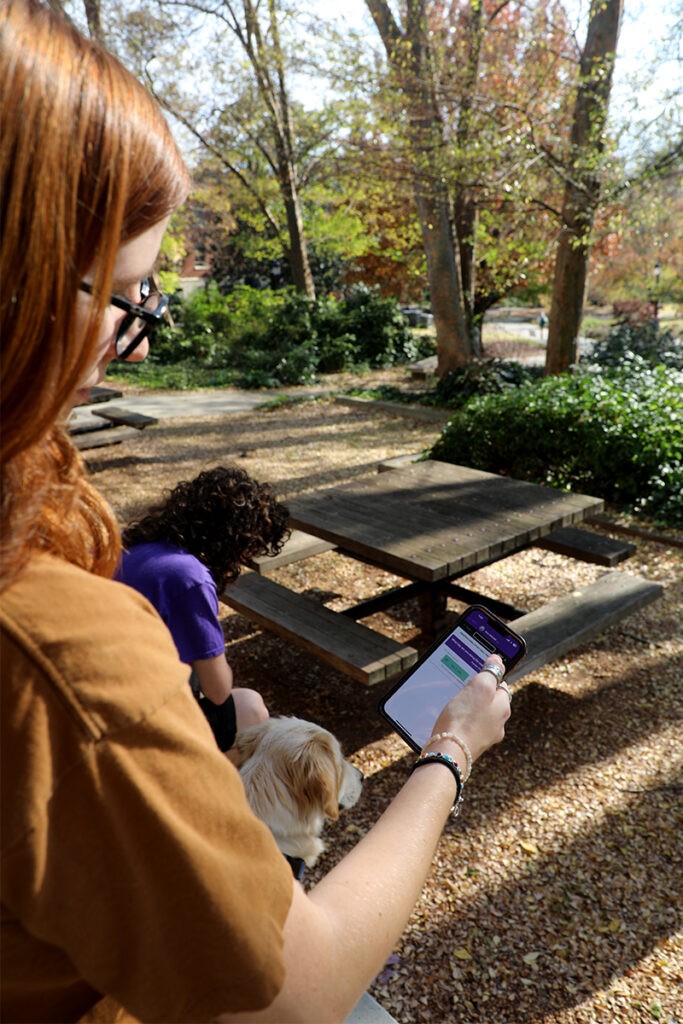
“You can find areas that are close to your classes on campus that you’re going to regularly. It could just be adding another five or 10 minutes to your regular routine,” Hall said. “We’re hoping that if we get enough students aware of the issue and caring about these unnecessary bird deaths, that collective student voice might be persuasive in making the campus address it.”
The team has consulted with the Office of University Architects and is exploring solutions like window treatments designed to prevent bird collisions. A $900 enhancement award from VIPR will help with that, but for now, the team is focused on identifying which buildings should be a priority.
“It’s really important to educate people on the roles that birds play in the broader ecosystem,” Caruso said. “Bird conservation should be regarded with the same level of importance as something like maintaining agricultural infrastructures. Birds carry out ecosystem services, such as native seed dispersal, that are really important for all aspects of life.”
A wing and a prayer
Going forward, the group plans to continue collecting data and will publicize their findings to create a compelling argument for implementing window treatments.
“I hope to see at least one ‘trouble’ building actually get to the point of implementation in the next few semesters. There are some barriers to overcome, with funding and getting approval, but the hope is that we’ll at least be able to come up with enough data to show that a particular building is a really big problem for birds and get it modified,” Caruso said.
A 2024 study estimates that in the U.S., more than 1 billion birds a year are killed when they fly into a building.
“People think, ‘It’s only this one building. It’s not going to make a big difference.’ But it does,” Lekas said. “Everyone’s probably seen at least one dead bird. But if everybody has seen at least one dead bird, that adds up. And a lot of those birds are getting cleaned up before anybody sees them.”